In one minute
- Between about 1800 and 1890 the United States grew from the Atlantic coast all the way to the Pacific Ocean.
- Pioneers traveled west for land, gold, jobs and new beginnings, often on long and dangerous trails.
- The land the United States gained was already home to many Native nations, and expansion cost them most of their homelands.
- Laws such as the Indian Removal Act and the Homestead Act, and the transcontinental railroad, shaped who gained and who lost.
- 'Manifest Destiny' was an idea some Americans used to argue that taking the West was meant to be. Many people, then and now, disagree.
A country that kept growing
In 1800 most Americans lived east of the Mississippi River. By 1890 the United States stretched all the way to the Pacific Ocean. This long period of growth is called westward expansion.
It is a story of courage, hard work and new beginnings. It is also a story of war, broken promises and the loss of homelands. To understand it, you need to look at it from more than one point of view.
The Louisiana Purchase and Lewis and Clark
In 1803, President Thomas Jefferson bought the Louisiana Territory from France. It stretched from the Mississippi River to the Rocky Mountains and roughly doubled the size of the country. France sold land that it claimed, but dozens of Native nations, including the Osage, Lakota, Mandan and many others, already lived there.
Jefferson sent Meriwether Lewis and William Clark to explore the new land and find a route to the Pacific. Their group, the Corps of Discovery, set out in 1804 and returned in 1806.
Two people besides the captains were especially important:
- Sacagawea, a young Lemhi Shoshone woman, traveled with the expedition with her baby son. She helped with translation and recognized landmarks in her homeland, and her presence showed Native nations that the group was not a war party.
- York, a Black man enslaved by William Clark, did the same hard work as the other men, hunted and helped meet Native nations. After the journey, Clark did not free him for many years.
The expedition also depended on food, guidance and shelter from many Native nations along the way.
Removal from the East
While some Americans looked west, the government pushed Native nations out of the East. The Indian Removal Act of 1830 allowed the president to make agreements forcing nations to trade their eastern homelands for land west of the Mississippi.
The Cherokee fought removal in court and in the newspapers. Even so, in 1838 and 1839 the U.S. Army forced them from their homes. Thousands died on the journey, which the Cherokee call the Trail of Tears. The Choctaw, Creek (Muscogee), Chickasaw and Seminole nations were also removed. Their descendants live in Oklahoma and elsewhere today.
Life on the Oregon Trail
Starting in the 1840s, thousands of families packed covered wagons, nicknamed prairie schooners, and set out on the Oregon Trail. The journey of around 2,000 miles from Missouri to Oregon took about four to six months.
Most people walked beside their wagons to save the oxen. Children gathered buffalo chips (dried dung) for fires, fetched water and looked after younger brothers and sisters. Families crossed rivers, deserts and mountains. The greatest danger was disease, especially cholera, along with accidents such as wagon wheels and drownings. Many travelers traded with Native people for food, horses and help crossing rivers.
Gold, land and railroads
The Gold Rush
In 1848, gold was found in California, which the United States had just taken from Mexico after the U.S.–Mexican War. By 1849 people were rushing in from across the country and the world. Few got rich. California’s Native population, already harmed by Spanish missions, suffered terrible violence during these years.
The Homestead Act
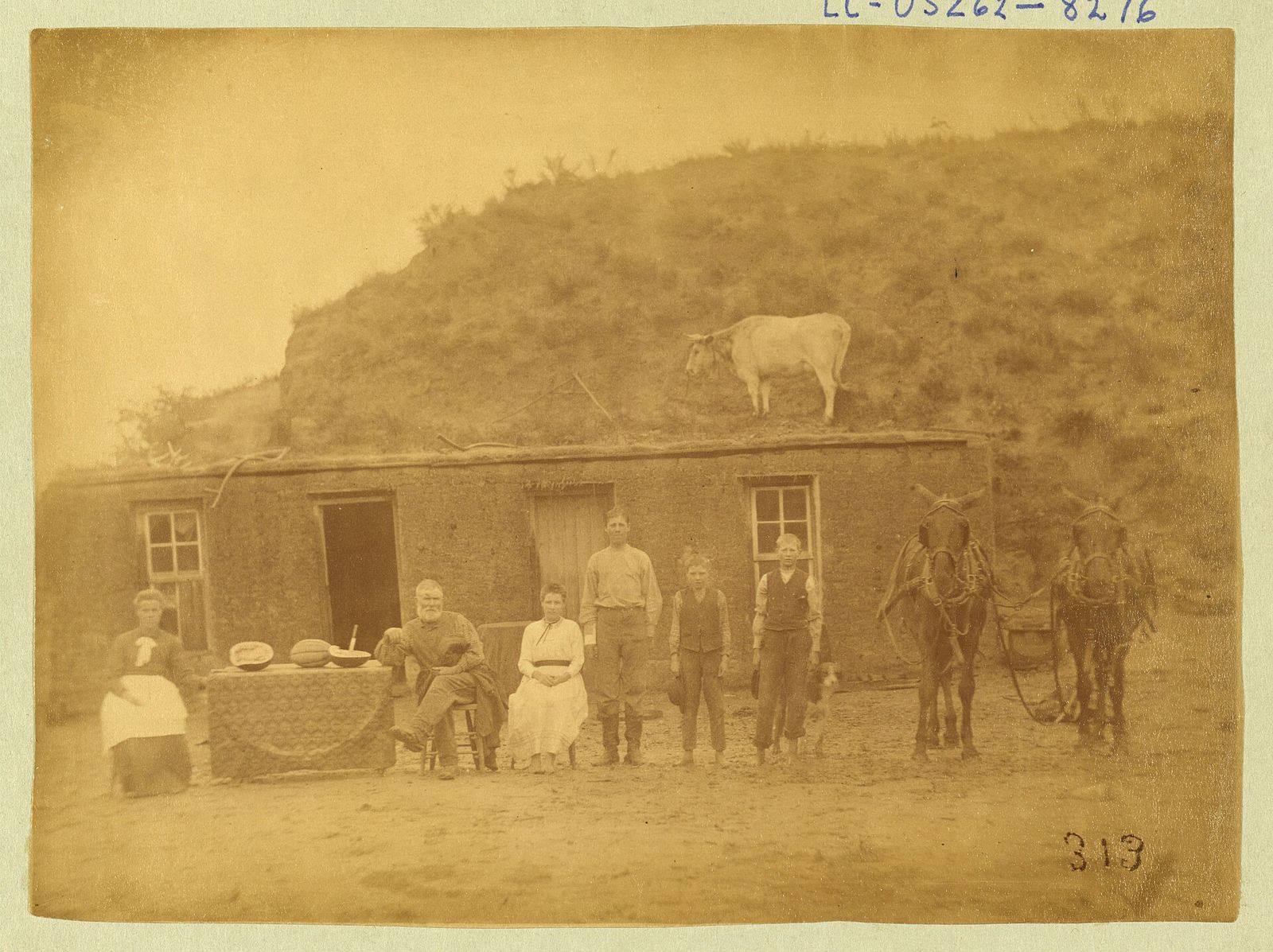
The Homestead Act of 1862 offered 160 acres of public land to settlers who lived on it and farmed it for five years. Hundreds of thousands of families, including immigrants, women who headed households and Black Americans, claimed land this way. But the land given away was land that had been taken from Native nations.
The transcontinental railroad
Also in 1862, Congress approved a railroad to link the East and West. The Central Pacific built east from California, and the Union Pacific built west from Nebraska. Thousands of Chinese workers blasted tunnels through the Sierra Nevada mountains in dangerous conditions, while many Irish workers laid track across the plains. The two lines met at Promontory Summit, Utah, in 1869. Trips that once took months could now take about a week.
The bison and the Plains nations
For Plains nations such as the Lakota, Cheyenne, Comanche and Kiowa, the bison (often called buffalo) provided food, clothing, shelter and tools, and held deep spiritual meaning. Bison once numbered in the millions. During the 1870s and 1880s, hunters killed them in enormous numbers for hides and sport, and railroads made shipping hides easy. By the late 1880s, very few were left. Losing the bison made it much harder for Plains nations to resist being forced onto reservations. Today, many tribal nations lead efforts to bring bison back.
Many points of view
- Pioneer families often saw the West as a chance to own land and build a better life. Their journeys were hard and sometimes deadly.
- Native nations experienced expansion as an invasion of their homelands. They resisted through diplomacy, treaties, court cases and war, and many treaties were broken by the United States.
- Mexican Americans such as Californios in California and Tejanos in Texas suddenly found themselves living in the United States after 1848. Many lost land in courts despite promises in the treaty.
- Black homesteaders saw the West as a place to escape violence and unfair treatment in the South. Around 1879, thousands of Exodusters moved to Kansas and built towns such as Nicodemus.
- Chinese immigrants worked on railroads, in mines and in towns, but faced discrimination and, later, laws that blocked more Chinese people from coming.
What was “Manifest Destiny”?
In the 1840s, some writers and politicians said it was America’s “Manifest Destiny” to spread across the continent. “Manifest” means obvious, and “destiny” means something meant to happen. People used this idea to argue that taking land from Native nations and Mexico was natural and right.
Historians treat Manifest Destiny as a belief people held, not as a fact. Many people at the time, including Native leaders and some Americans who opposed the war with Mexico, disagreed with it.
How to use this page for homework
- Use the timeline to make a cause-and-effect chain, such as Louisiana Purchase → Lewis and Clark → more settlers moving west.
- For a “points of view” assignment, pick two groups from the “Many points of view” section and compare their experiences.
- When writing about Native nations, name the specific nation (for example, Cherokee or Lakota) rather than using a general term.
- Check one primary source from the list below, such as the Homestead Act at the National Archives, and quote a short line in your answer.
Timeline
- 1803The United States buys the Louisiana Territory from France, roughly doubling the size of the country.
- 1804–1806The Lewis and Clark expedition travels to the Pacific Ocean and back, helped by Sacagawea and many Native nations along the way.
- 1830Congress passes the Indian Removal Act.
- 1838–1839The Cherokee are forced west on the Trail of Tears; thousands die.
- 1840sFamilies begin traveling the Oregon Trail in large numbers.
- 1845Texas is admitted as a state. The phrase 'Manifest Destiny' appears in print the same year.
- 1846–1848The U.S.–Mexican War. In the Treaty of Guadalupe Hidalgo, Mexico gives up a huge area, including California.
- 1848–1849Gold is found in California, and the Gold Rush begins.
- 1862Congress passes the Homestead Act and the Pacific Railway Act.
- 1869The first transcontinental railroad is completed at Promontory Summit, Utah.
- 1879Thousands of Black Southerners, called Exodusters, move to Kansas.
- 1880sBison, once numbering in the millions, are hunted to near extinction.
Key words
- Pioneer
- One of the first people from a group to settle or work in a new area. Many pioneers moved into lands where other people already lived.
- Territory
- An area controlled by the United States that was not yet a state.
- Expedition
- A long journey made by a group of people for a special purpose, such as exploring.
- Homestead
- Land and a home claimed by a settler, often under the Homestead Act.
- Manifest Destiny
- The idea, popular in the 1840s, that the United States was meant to spread across North America. It was used to justify taking land.
- Removal
- The U.S. government policy of forcing Native nations to leave their homelands and move west.
- Reservation
- Land set aside for a Native nation, usually much smaller than its original homeland.
- Treaty
- A formal agreement between nations. The United States made, and often broke, treaties with Native nations.
- Prairie schooner
- A nickname for the covered wagons pioneers used. From far away, their white covers looked like ship sails.
- Exodusters
- Black Americans who left the South for Kansas and other western places around 1879 in search of land and freedom.
Think and write
Printable version- Draw a simple map showing the Louisiana Purchase, the Oregon Trail and the route of the transcontinental railroad.
- Why did people move west? List at least four different reasons.
- What did Sacagawea and York contribute to the Lewis and Clark expedition?
- How did westward expansion look to a pioneer family compared with a Lakota or Cherokee family?
- What did the Homestead Act promise? Who was able to use it, and who was left out?
- Why were bison so important to Plains nations, and what happened when the herds were destroyed?
- Explain 'Manifest Destiny' in your own words. Why do historians say it was an idea, not a fact?
- Who built the transcontinental railroad? Describe one challenge the workers faced.
Sources and further reading
- Louisiana Purchase Treaty (1803) (opens in a new tab) — National Archives
- Lewis and Clark National Historic Trail: History & Culture (opens in a new tab) — National Park Service
- Indian Removal Act: Primary Documents in American History (opens in a new tab) — Library of Congress
- Trail of Tears National Historic Trail: History & Culture (opens in a new tab) — National Park Service
- Oregon National Historic Trail: History & Culture (opens in a new tab) — National Park Service
- Homestead Act (1862) (opens in a new tab) — National Archives
- Exodusters (opens in a new tab) — National Park Service, Homestead National Historical Park
- Treaty of Guadalupe Hidalgo (1848) (opens in a new tab) — National Archives
- Golden Spike National Historical Park: History & Culture (opens in a new tab) — National Park Service
Links to outside organizations are for reference. They do not imply that those organizations endorse KidInfo.
Citing this page for school? Use: KidInfo Editorial. “Westward Expansion and the Pioneer Era.” KidInfo, updated 2026-11-10. https://kidinfo.com/learn/american-history/westward-expansion/