In one minute
- Native people are not one group. Hundreds of distinct nations, each with its own name, language, history and government, lived in North America long before Europeans arrived, and they still do.
- Native nations built governments, trade networks, farms, towns and cities, and adapted to every kind of environment, from deserts to Arctic coasts.
- Colonization brought disease, war, loss of land, broken treaties and forced removal. Native nations resisted and survived.
- Today the US government recognizes 575 tribal nations, which govern themselves as sovereign nations. Many other communities are recognized by states or are seeking recognition.
- The best way to learn about a nation is to use its own name and, where possible, its own sources.
Many nations, not one
Long before Europeans sailed to North America, the land was home to hundreds of different peoples. Each had its own name for itself, its own language, its own beliefs and its own way of governing. A Wampanoag family on the coast of what is now Massachusetts lived a very different life from a Diné (Navajo) family in the desert Southwest or a Tlingit family in the rainforests of what is now Alaska.
That is still true today. The US government recognizes 575 tribal nations, and many more communities are recognized by states or are working toward recognition. Native people live in every state, in cities, towns and on reservations. They are doctors, teachers, artists, farmers, lawmakers and students. Learning about Native history means learning about many living nations, not one group from the past.
Learning about nations by region
The examples below are only a small sample. Each nation has a much deeper history than one paragraph can hold.
Northeast
The Haudenosaunee (often called Iroquois) Confederacy brought together the Mohawk, Oneida, Onondaga, Cayuga and Seneca nations, and later the Tuscarora. They agreed to settle disputes peacefully under a shared Great Law of Peace, while each nation kept its own council. Clan mothers held important roles, including choosing leaders.
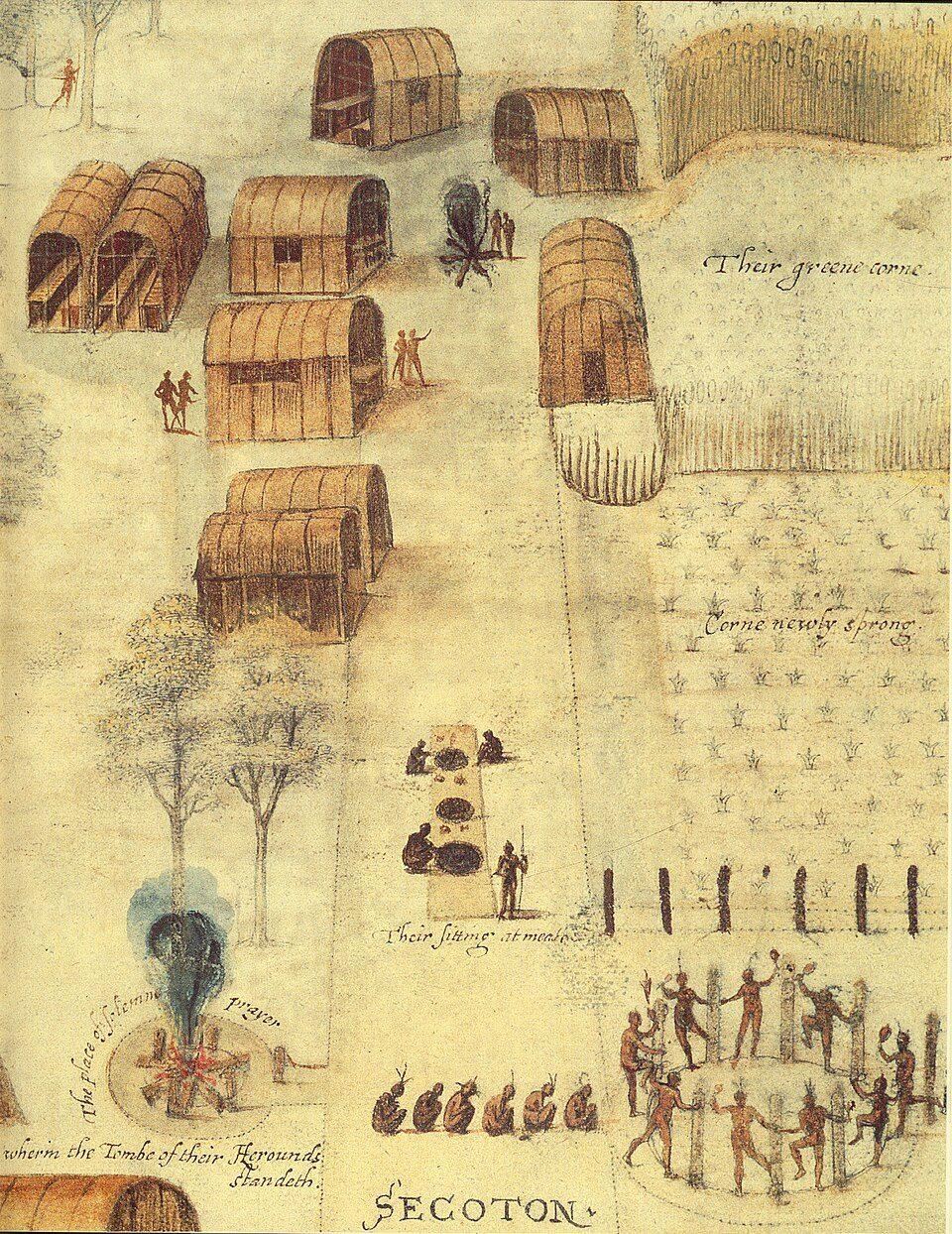
The Wampanoag, the “People of the First Light,” have lived in what is now southeastern Massachusetts and Rhode Island for thousands of years. They farmed, fished and gathered along the coast and moved between summer and winter homes.
Southeast
The Cherokee lived in towns in the southern Appalachian Mountains. They farmed large fields, built council houses and governed through town councils. In the early 1800s, a Cherokee man named Sequoyah created a writing system for the Cherokee language, and soon many Cherokee people could read and write in their own language.
Great Plains
The Lakota, part of the Oceti Sakowin (Seven Council Fires), lived on the northern Great Plains. After horses spread north from Spanish colonies, horses became central to Lakota life, travel and hunting buffalo, which provided food, clothing and shelter.
Southwest
Pueblo peoples, such as the Hopi, Zuni and many Rio Grande Pueblos, built multistory homes of stone and adobe and farmed in a dry climate using careful water management. Their ancestors built the great houses at Chaco Canyon. The Diné (Navajo) people’s homeland lies among four sacred mountains. Today the Navajo Nation is the largest reservation in the United States by land area.
Great Lakes
The Ojibwe, also called Anishinaabe, lived around the Great Lakes. They traveled by birchbark canoe, fished, hunted and harvested wild rice, which remains culturally important today.
Pacific Northwest
The Tlingit live along the coast and islands of what is now southeast Alaska. The sea and rivers provided salmon and other foods. Tlingit artists are known for carved wooden poles, clan crests and woven robes that tell family and clan histories.
Governments, trade and farming
Native nations had well-organized ways of making decisions. Some chose leaders through councils. Some, like the Haudenosaunee, joined into confederacies. Many nations made agreements with each other about trade, hunting grounds and peace.
Trade networks crossed the continent long before European goods arrived. Shells from the coasts, copper from the Great Lakes and obsidian from the West have all been found far from where they came from.
Farming fed millions of people. Many nations grew the Three Sisters: corn, beans and squash. Corn stalks give beans something to climb. Beans add nutrients to the soil. Squash leaves shade the ground, keeping it moist and blocking weeds. Native farmers also developed many crops that people around the world eat today, including corn, potatoes, tomatoes, peppers and squash.
Some nations built large towns and cities. Cahokia, near present-day St. Louis, was home to thousands of people and had huge earthen mounds, some of which still stand.
What colonization changed
When Europeans arrived, they brought diseases such as smallpox that Native people had never been exposed to. Epidemics killed enormous numbers of people, sometimes before Native communities had even met Europeans face to face.
As colonies grew, settlers wanted more land. Native nations defended their homelands in wars and in diplomacy. The United States made hundreds of treaties with Native nations, promising land and rights in exchange for other land. Many of those promises were broken.
In 1830, Congress passed the Indian Removal Act. The US government forced many Southeastern nations, including the Cherokee, Muscogee (Creek), Choctaw, Chickasaw and Seminole, to leave their homelands for land west of the Mississippi River. Thousands died on these journeys, which the Cherokee remember as the Trail of Tears.
Later, many Native children were sent to boarding schools designed to separate them from their families, languages and cultures. Through all of this, Native nations survived, resisted and kept their languages, ceremonies and communities alive.
Native nations today
Federally recognized tribes are sovereign, which means they have the right to govern themselves. Tribal governments run courts, schools, police departments, health clinics and businesses. They protect land and water and work to keep their languages alive through classes and immersion schools. Their relationship with the United States is government to government, based on treaties, the US Constitution and federal law.
Respectful research tips
- Use the nation’s name. Say “Cherokee” or “Lakota” instead of only “Indians” or “Native Americans” when you know which nation you mean.
- Go to the source. Many nations have official websites with their own histories. Start there when you can.
- Watch for the past-tense trap. Native nations are not only part of history. Write about them in the present too.
- Skip the stereotypes. Feather headdresses, “war whoops” and costumes do not represent real nations. Headdresses and other regalia have specific meanings and are not costumes.
- Notice who is telling the story. Ask whether a book or website includes Native voices.
How to use this page for homework
- If your assignment is about “Native Americans,” ask your teacher if you can focus on one nation. You will be able to write more accurately.
- Use the regional sections to find a starting point, then check the nation’s own website or the Smithsonian’s Native Knowledge 360° resources.
- When you describe what happened during colonization, include both what was done to Native nations and how they responded.
- Use the glossary words, like sovereignty and treaty, correctly in your writing.
Timeline
- Thousands of years agoAncestors of today's Native nations live across the Americas. Many nations' own histories say they have always lived in their homelands.
- About 1050–1350 CECahokia, a large city of the Mississippian culture near present-day St. Louis, is at its height.
- About 900–1150 CEAncestral Pueblo people build large stone great houses in Chaco Canyon, in present-day New Mexico.
- Before 1600s (date debated)The Haudenosaunee Confederacy forms under the Great Law of Peace, uniting five nations. Historians and Haudenosaunee tradition give different dates.
- 1492 onwardEuropean arrival brings new diseases, and epidemics kill very large numbers of Native people over the following centuries.
- 1620sThe Wampanoag, whose people had recently suffered a terrible epidemic, meet the English colonists at Plymouth.
- 1722The Tuscarora join the Haudenosaunee Confederacy, which becomes the Six Nations.
- 1830Congress passes the Indian Removal Act, leading to the forced removal of many Southeastern nations.
- 1838–1839Thousands of Cherokee people are forced west on the Trail of Tears; many die along the way.
- 1924The Indian Citizenship Act makes Native people born in the United States US citizens.
- 1975The Indian Self-Determination and Education Assistance Act gives tribes more control over their own programs.
- Today575 federally recognized tribal nations govern themselves, and Native people live in every state.
Key words
- Indigenous
- Describes the first peoples of a place and their descendants.
- Nation
- A people with a shared identity and its own government. Many Native nations are also called tribes.
- Sovereignty
- The right of a nation to govern itself and make its own laws.
- Federally recognized tribe
- A tribal nation that has a formal government-to-government relationship with the United States.
- Treaty
- A formal agreement between nations. The United States signed hundreds of treaties with Native nations.
- Reservation
- Land set aside for a tribal nation, often after it was forced to give up much larger homelands.
- Confederacy
- A group of nations that join together while each keeps its own government.
- Three Sisters
- Corn, beans and squash grown together. Each plant helps the others grow.
- Removal
- The forced movement of Native nations away from their homelands by the US government.
- Oral history
- History passed down by speaking and storytelling across generations.
Think and write
Printable version- Choose one nation named on this page. Find its official website. What does the nation say about its own history and government today?
- Why is it more accurate to say "Native nations" than to describe all Native people as one group?
- Explain how the Three Sisters help each other grow. Why was this a smart farming system?
- Cause and effect: How did disease from Europe change the history of North America?
- What is a treaty? Why does it matter that many treaties were broken?
- What does tribal sovereignty mean? Give one example of something a tribal government does today.
- Compare how two nations from different regions adapted to their environment.
- Look at a picture or story about Native people. Does it show a real, specific nation, or a stereotype? How can you tell?
Sources and further reading
- What is a federally recognized tribe? (opens in a new tab) — US Department of the Interior, Bureau of Indian AffairsStates 575 federally recognized tribes as of the 2026-11-10 automated check.
- Tribal Leaders Directory (opens in a new tab) — US Department of the Interior, Bureau of Indian Affairs
- About Tribes (opens in a new tab) — National Congress of American Indians
- Who We Are (opens in a new tab) — Haudenosaunee Confederacy
- History (opens in a new tab) — Cherokee Nation
- Mashpee Wampanoag Tribe (opens in a new tab) — Mashpee Wampanoag Tribe
- Wampanoag Tribe of Gay Head (Aquinnah) (opens in a new tab) — Wampanoag Tribe of Gay Head (Aquinnah)
- Trail of Tears National Historic Trail: History and Culture (opens in a new tab) — National Park Service
- Native Knowledge 360° Education Initiative (opens in a new tab) — Smithsonian National Museum of the American IndianBot-blocked (403) during automated check on 2026-11-10; long-standing Smithsonian education site.
Links to outside organizations are for reference. They do not imply that those organizations endorse KidInfo.
Citing this page for school? Use: KidInfo Editorial. “Indigenous Nations of North America.” KidInfo, updated 2026-11-10. https://kidinfo.com/learn/american-history/indigenous-nations/