In one minute
- In the 1400s and 1500s, European kingdoms sent sailors to find new sea routes to Asia for spices, silk and gold.
- Norse sailors reached North America around 1000 CE, about 500 years before Columbus. The Americas were already home to millions of Indigenous people.
- Columbus's voyages in 1492 and after led to Spanish colonies in the Caribbean, with devastating results for the Taíno people.
- Explorers from Spain, France, England and the Netherlands claimed lands that already belonged to Indigenous nations, who often guided, traded with or resisted them.
- The Columbian Exchange moved plants, animals, people and diseases between the hemispheres and changed the whole world.
Why did Europeans set out to sea?
In the 1400s, people in Europe wanted goods from Asia, such as pepper, cinnamon, silk and porcelain. These goods traveled long distances over land and sea, passing through many traders, so they were very expensive by the time they reached Europe. European rulers and merchants hoped that if their ships could sail directly to Asia, they could get those goods more cheaply and grow rich.
Explorers had other reasons too. Some wanted gold and land. Some wanted to spread Christianity. Many wanted fame. Kingdoms such as Portugal, Spain, France, England and the Netherlands competed to claim new lands and trade routes before their rivals.
New tools for long voyages
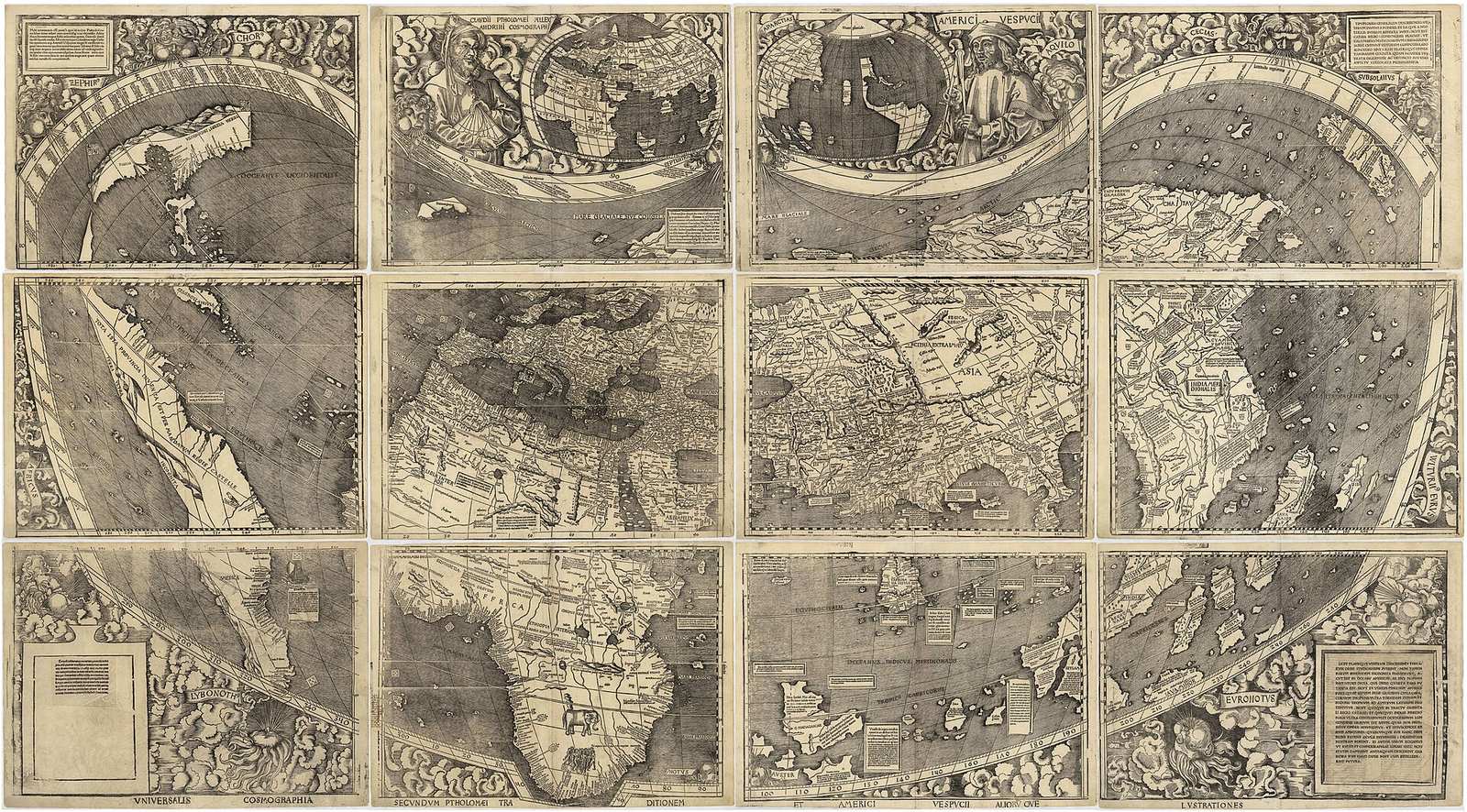
Sailing far from land was dangerous. New ship designs, like the Portuguese caravel, could sail well against the wind. Sailors used the compass, which came to Europe from China, to tell direction. They used the astrolabe and quadrant to measure the height of the sun or North Star, which helped them estimate how far north or south they were. Better maps, often built on knowledge shared by Arab, Jewish and other mapmakers, helped too.
Portugal led early voyages down the coast of Africa. Bartolomeu Dias sailed around the southern tip of Africa in 1488, and Vasco da Gama reached India in 1498.
People were already here
When you read about explorers, remember one important fact: the Americas were not empty. Millions of Indigenous people lived across North and South America in hundreds of nations, with farms, cities, trade routes and governments.
Europeans were not even the first to cross the Atlantic. Around the year 1000, Norse sailors from Greenland, including Leif Erikson, reached North America. Archaeologists have found the remains of their buildings at L’Anse aux Meadows in Newfoundland, Canada. The Norse did not stay long.
Columbus and the Taíno
Christopher Columbus was an Italian sailor who believed he could reach Asia by sailing west. Spain’s rulers, Queen Isabella and King Ferdinand, paid for his voyage. In October 1492, his three ships reached an island in the Bahamas. The people who lived there were Lucayan Taíno. Columbus thought he had reached the “Indies” near Asia, which is why Europeans began calling Indigenous people “Indians.”
Columbus made four voyages. He and the Spanish colonists who followed forced the Taíno to search for gold and to work for them, punished those who resisted, and took people as captives. Disease, violence and forced labor caused the Taíno population of the Caribbean to fall dramatically within a few decades. Taíno descendants and Taíno culture survive today, especially in Puerto Rico, Cuba and the Dominican Republic.
Columbus’s voyages mattered because they began lasting contact between the hemispheres. That contact changed the world, but it was a disaster for many Indigenous peoples.
Other explorers in North America
| Explorer | Sailed for | What happened |
|---|---|---|
| John Cabot | England | Reached the coast of North America in 1497, probably Newfoundland. England later used his voyage to claim land. |
| Juan Ponce de León | Spain | Led an expedition to Florida in 1513. Calusa and other nations resisted Spanish settlement. |
| Jacques Cartier | France | Sailed up the St. Lawrence River in the 1530s. He met the St. Lawrence Iroquoians, an Iroquoian-speaking people, and took people back to France, including the sons of the leader Donnacona. |
| Hernando de Soto | Spain | Led a large, violent expedition through the Southeast from 1539 to 1543, searching for gold and spreading disease. |
| Francisco Vázquez de Coronado | Spain | Traveled through the Southwest and onto the Plains from 1540 to 1542, searching for cities of gold. He attacked Zuni and other Pueblo communities and found no gold. |
| Samuel de Champlain | France | Mapped much of the Northeast and founded Quebec in 1608. He formed alliances with the Wendat (Huron) and Algonquin nations. |
| Henry Hudson | Netherlands and England | Explored the Hudson River in 1609, where the Lenape and Mohican lived, and later Hudson Bay. |
Indigenous guides, navigators and traders
Explorers rarely found their way alone. Indigenous people guided expeditions, drew maps, shared knowledge of rivers and trails, translated and traded food and furs. Some did this willingly to build alliances or gain trade goods. Others were forced or kidnapped. Indigenous nations also made their own choices about explorers: they welcomed some, traded carefully with others, and drove some away. Indigenous people’s knowledge was often the reason an expedition survived.
The Columbian Exchange
After 1492, plants, animals, people and germs began crossing the Atlantic in both directions. Historians call this the Columbian Exchange.
- From the Americas to the rest of the world: corn, potatoes, tomatoes, peppers, beans, squash, peanuts, cacao (chocolate), vanilla and turkeys.
- From Europe, Africa and Asia to the Americas: horses, cattle, pigs, sheep, wheat, rice, sugarcane, coffee, bananas and honeybees.
- Diseases: smallpox, measles and influenza spread to the Americas and killed huge numbers of Indigenous people.
- People: European colonists arrived, and millions of Africans were later brought to the Americas by force and enslaved.
Today, foods like Italian tomato sauce or Irish potatoes exist because of this exchange.
Thinking about the word “discovery”
Many older books say explorers “discovered” places. But you cannot discover a place where people already live. A more accurate way to describe these voyages is to say that explorers reached, arrived in, mapped or claimed places that were new to Europeans.
When you read about an explorer, ask:
- Who already lived in this place?
- Whose point of view is this book or website telling?
- What happened to the people who lived there after the explorer arrived?
Asking these questions does not mean explorers’ voyages were unimportant. It means you are telling the full story.
How to use this page for homework
- For an explorer report, use the table as a starting point, then add the Indigenous nations the expedition met and what happened to them.
- Use the Columbian Exchange list to make a chart or poster.
- Replace “discovered” with a more accurate verb in your writing and explain why.
- Check dates against one of the sources below, since some voyage dates are given differently in different books.
Timeline
- About 1000 CENorse sailors, including Leif Erikson, reach North America and build a camp at L'Anse aux Meadows in present-day Newfoundland, Canada.
- 1488Portuguese sailor Bartolomeu Dias sails around the southern tip of Africa.
- 1492Christopher Columbus, sailing for Spain, lands in the Bahamas and meets the Lucayan Taíno people.
- 1497John Cabot, sailing for England, reaches the coast of North America, probably Newfoundland.
- 1498Vasco da Gama of Portugal reaches India by sailing around Africa.
- 1513Juan Ponce de León leads a Spanish expedition to Florida.
- 1519–1522A Spanish expedition begun by Ferdinand Magellan sails around the world. Magellan dies on the way.
- 1534–1542Jacques Cartier makes three voyages for France to the St. Lawrence River region.
- 1539–1543Hernando de Soto's expedition travels through the Southeast, causing violence and spreading disease.
- 1540–1542Francisco Vázquez de Coronado's expedition travels through the Southwest and Plains searching for gold.
- 1608Samuel de Champlain founds Quebec for France.
- 1609Henry Hudson, sailing for the Dutch, explores the river later named after him.
Key words
- Explorer
- A person who travels to places that are unfamiliar to them, often to map them or claim them for a country.
- Expedition
- A journey made by a group of people for a specific purpose.
- Trade route
- A path, by land or sea, that merchants use to carry goods to sell.
- Caravel
- A small, fast sailing ship used by Portuguese and Spanish explorers.
- Navigation
- Figuring out where you are and how to get where you want to go.
- Astrolabe
- A tool sailors used to measure the height of the sun or stars to help find their location.
- Columbian Exchange
- The movement of plants, animals, people and diseases between the Americas and Europe, Africa and Asia after 1492.
- Colonization
- When one country takes control of land where other people already live and settles its own people there.
- Encomienda
- A Spanish system that forced Indigenous people to work for Spanish colonists.
- Perspective
- A point of view. The same event can look very different depending on who is describing it.
Think and write
Printable version- Why did European kingdoms want a new sea route to Asia? List two reasons.
- What new tools and ship designs helped sailors travel farther from shore?
- Rewrite this sentence so it is more accurate: "Columbus discovered America."
- How did the arrival of Europeans change life for the Taíno? Use two facts.
- Make a two-column chart of the Columbian Exchange: things that went from the Americas to Europe, Africa and Asia, and things that came the other way.
- Choose one explorer. Which Indigenous nations did his expedition meet? How did they respond?
- Why do you think different people describe the same expedition in very different ways?
Sources and further reading
- 1492: An Ongoing Voyage (opens in a new tab) — Library of Congress
- Exploring the Early Americas (opens in a new tab) — Library of Congress
- L'Anse aux Meadows National Historic Site: Culture and history (opens in a new tab) — Parks Canada
- De Soto National Memorial: History and Culture (opens in a new tab) — National Park Service
- Coronado National Memorial: History and Culture (opens in a new tab) — National Park Service
- Saint Croix Island International Historic Site: History and Culture (opens in a new tab) — National Park Service
- Columbian exchange (opens in a new tab) — Encyclopaedia BritannicaBot-blocked (403) during automated check on 2026-11-10.
- The Ages of Exploration (opens in a new tab) — The Mariners' Museum and ParkBot-blocked (403) during automated check on 2026-11-10.
Links to outside organizations are for reference. They do not imply that those organizations endorse KidInfo.
Citing this page for school? Use: KidInfo Editorial. “The Age of Exploration.” KidInfo, updated 2026-11-10. https://kidinfo.com/learn/american-history/age-of-exploration/